Gallstones in Young Adults: Why Chhattisgarh is Seeing a Rise
What Are Gallstones?
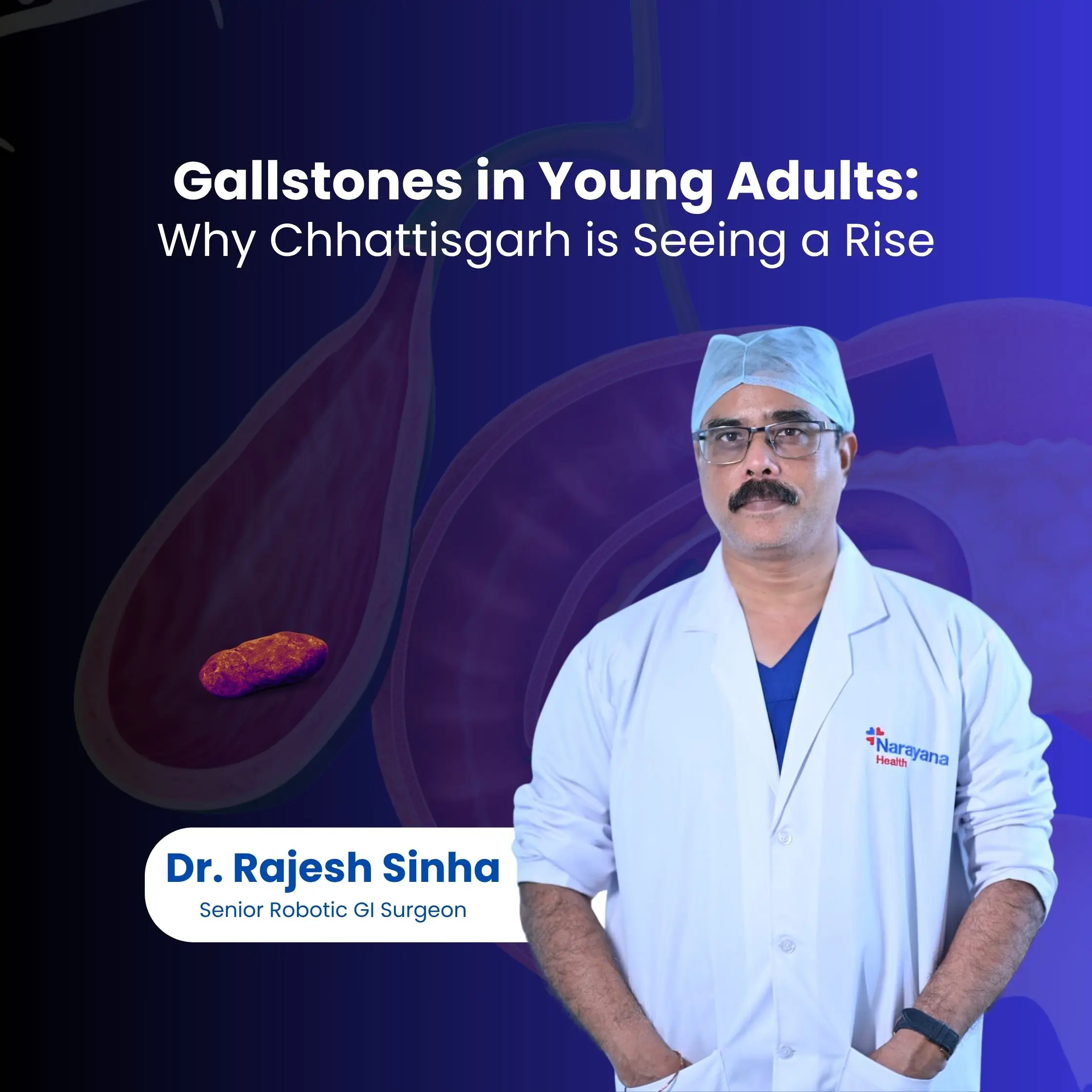
Gallstones are hardened deposits that form inside the gallbladder — a small organ beneath the liver that stores bile. Bile is a digestive fluid that helps break down fats. When the composition of bile becomes imbalanced — too much cholesterol, too much bilirubin, or too little bile salts — stones can form.
They range in size from a grain of sand to a golf ball, and a person can have one large stone or hundreds of tiny ones. Many people have gallstones without ever knowing it — until a stone blocks the bile duct or causes inflammation.
Why Are Young Adults in Chhattisgarh Getting Gallstones?
Several lifestyle and dietary factors specific to our region and generation are driving this rise:
- High-fat, low-fibre diets: Street food, fried snacks, packaged food and irregular meal timing are now part of daily life for young working adults in Raipur. These diets increase cholesterol levels in bile — a primary driver of gallstone formation.
- Sedentary lifestyle: Long hours at desks with minimal physical activity slow down gallbladder emptying — allowing bile to concentrate and stones to form.
- Obesity and rapid weight loss: Both extremes increase gallstone risk. Obesity causes excess cholesterol in bile; crash dieting or rapid weight loss causes the liver to release extra cholesterol and reduces gallbladder movement.
- Skipping meals and long fasting gaps: Common in young professionals and students — the gallbladder needs regular emptying through eating. Long gaps allow bile to stagnate and concentrate.
- Family history: Gallstones have a genetic component. If a parent or sibling has had gallstones, your risk is significantly higher.
- Female hormones: Women — particularly those on oral contraceptives or during pregnancy — have higher oestrogen levels, which increases cholesterol in bile. This is why women are twice as likely as men to develop gallstones.
- Diabetes and metabolic syndrome: Increasingly common even in younger populations, both conditions affect bile composition and gallbladder motility.
Symptoms — What Does a Gallstone Attack Feel Like?
Many gallstones are "silent" — they cause no symptoms and are discovered incidentally during an ultrasound for another reason. However, when a stone moves or causes a blockage, the symptoms can be unmistakable:
- Sudden, intense pain in the upper right abdomen — often described as a gripping or squeezing pain, lasting 30 minutes to several hours
- Pain after fatty meals — fried food, heavy meals, or even dairy can trigger an attack
- Pain that radiates to the right shoulder or back
- Nausea and vomiting
- Bloating and indigestion — often mistaken for acidity or gas
- Jaundice — yellowing of skin or eyes, indicating a stone blocking the bile duct (requires urgent treatment)
- Fever with chills — suggesting infection (cholangitis), which is a medical emergency
A very important point: Many young patients in Raipur come to me having been treated for "acidity" or "gastritis" for months — when the real cause was gallstones. If you have recurring upper abdominal pain that is not responding to antacids, please get an ultrasound done.
Diagnosis — What Tests Are Needed?
- Ultrasound abdomen — the most accurate and non-invasive test for gallstones. Highly reliable and widely available in Raipur.
- Blood tests — liver function tests, complete blood count, and bilirubin to assess for complications
- MRCP (Magnetic Resonance Cholangiopancreatography) — if stones in the bile duct are suspected
- CT scan — in complex cases or when other conditions need to be ruled out
Does Every Gallstone Need Surgery?
Not necessarily. The decision depends on whether the stones are causing symptoms and whether complications have occurred:
- Silent stones (no symptoms): Often monitored without surgery, especially in older patients or those with significant health risks
- Symptomatic stones: Surgery is recommended to prevent recurring attacks and complications
- Complications — cholecystitis, jaundice, pancreatitis: Surgery is required, sometimes urgently
For young adults specifically, I generally recommend surgery for symptomatic stones — because the risk of future complications increases over time, and the recovery from laparoscopic surgery at a young age is exceptionally fast.
Laparoscopic Cholecystectomy — What to Expect
The standard treatment for symptomatic gallstones is laparoscopic cholecystectomy — surgical removal of the gallbladder through small cuts. At NH MMI Hospital, Raipur, this is one of the most commonly performed procedures in my practice.
- 3–4 small cuts of less than 1 cm each
- Surgery duration: 30–45 minutes in most cases
- Hospital stay: same day or next morning discharge
- Return to desk work: 3–5 days
- Full normal activity including exercise: 2–3 weeks
- No dietary restrictions after complete recovery — the liver continues to produce bile and digestion is not affected long-term
One of the most common concerns I hear from young patients is: "Doctor, gallbladder nikaalne ke baad kya main normal khana kha sakta hoon?" The answer is yes — after a brief recovery period, almost all patients return to their normal diet without restriction.
Can Gallstones Be Prevented?
While genetics cannot be changed, lifestyle factors can significantly reduce risk:
- Eat regular meals — never skip breakfast; long fasting gaps increase risk
- Increase fibre intake — fruits, vegetables, whole grains
- Reduce fried and fatty foods — especially frequent consumption of street food and packaged snacks
- Stay physically active — even 30 minutes of walking daily makes a difference
- Maintain a healthy weight — and avoid crash dieting
- Stay hydrated — adequate water intake supports healthy bile composition
A Message for Young Adults in Raipur and Chhattisgarh
If you are in your 20s or 30s and have been experiencing recurring upper abdominal pain — particularly after meals — please do not dismiss it as acidity or stress. Get an ultrasound done. It takes 20 minutes and can give you a definitive answer.
Gallstones caught early — before complications develop — are straightforward to treat. Gallstones ignored until they cause jaundice, pancreatitis, or infection are a much more serious and complex problem.
And if surgery is needed — laparoscopic cholecystectomy in Raipur is safe, fast, and will have you back to your normal life within days. You do not need to travel to Mumbai or Hyderabad for this.
Expert GI Surgery in Raipur
If you have been diagnosed with gallstones or are experiencing symptoms, an early consultation prevents complications and ensures the best outcome.
Dr. Rajesh Sinha | Laser, Laparoscopic & Robotic GI Surgeon | NH MMI Hospital, Raipur
25+ Years of Experience | 10,000+ Successful Surgeries | Expertise in Laparoscopic & Robotic GI Procedures
Call Now: +91 99938 20657